
Description
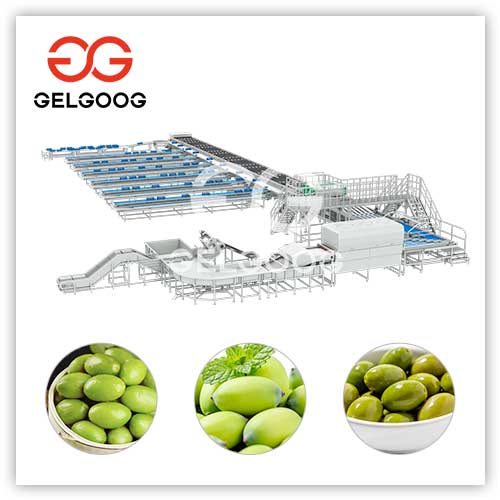
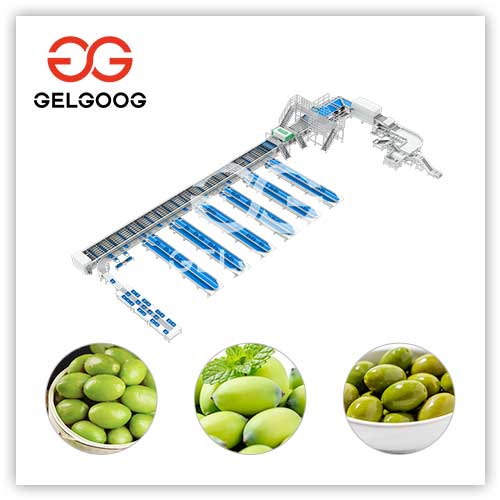
An olive grading machine automatically sorts fresh, brined and table olives by size, color, ripeness and defects — replacing manual labor with deep-learning vision and infrared inspection for higher yield and consistent quality.
What Is an Olive Grading Machine?
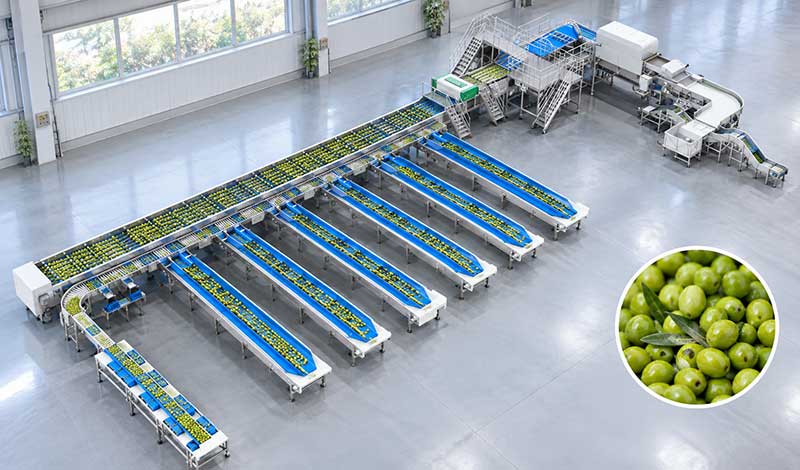
An olive grading machine (also called an olive sorting machine, olive color sorter or olive optical sorter) is an automated system that inspects every olive on a moving belt and routes it to the correct grade. Using high-speed industrial cameras and AI software, it judges each fruit on multiple attributes simultaneously.
✓Color & ripeness — separates green, violet and black olives, or table fruit from oil fruit.
✓Size & shape — grades by diameter and removes malformed fruit.
✓Surface defects — detects bruises, wrinkles, mold, disease and discoloration.
✓Foreign material — ejects leaves, stones, twigs and “mummy berry” (MOO).
How an Olive Grading Machine Works
Feeding
A gentle belt or water/dry feeder aligns olives in a single layer, preventing bruising and overlap.
Imaging
High-resolution cameras plus infrared (IR) and LED illumination capture color, shape and internal signals — often 360° with rolling cups.
AI Decision
A deep-learning model (FPGA / neural network) classifies each olive by ripeness, size, defect and quality in milliseconds.
Ejection
Pneumatic ejectors or blades blow off rejects into separate outlets — clean fruit continues to packaging or pressing.
Olive Sorting Machine Features
AI Deep-Learning Sort
Custom olive algorithms distinguish subtle discoloration, minor mold and wrinkled skin that traditional sorters miss. Accuracy reaches ≥99%.
Multi-Spectral Vision
Visible + infrared light reveals internal quality — sugar content, moisture and hidden rot — not just surface color.
Gentle Handling
Soft PVC belts and rotating cups protect skins from bruising, suitable for both fresh and pickled olives.
Stainless Steel Build
AISI 304/316L food-grade, waterproof and corrosion-resistant for humid, salty processing environments.
One-Touch Recipes
A touchscreen stores sorting “recipes” per variety — switch from table olives to oil olives in one tap.
Real-Time Analytics
Track throughput, reject rate and grade mix live; export reports for quality control and traceability.
Frequently Asked Questions
What can an olive grading machine actually detect?
Modern machines grade by color and ripeness (green → violet → black), size and shape, surface defects (bruises, wrinkles, mold, disease, discoloration) and foreign material such as leaves, twigs, stones and mummy berry. Infrared models also assess internal quality like moisture and hidden rot.
How accurate is automated olive sorting vs manual labor?
Optical and AI sorters typically achieve ≥99% sorting accuracy with 360° scanning and no “blind spots.” A single machine can replace 8–12 manual sorting workers while working continuously without fatigue.
Will the machine damage delicate olives?
No. Gentle belt feeders and rotating cups move fruit in a single layer with minimal contact, protecting skins from bruising. This applies to both fresh olives and brined/pickled olives.
What throughput do I need?
Compact units handle 1–2 t/h for small farms and co-ops, channel sorters cover 4–15 t/h for mid-to-large plants, and industrial belt sorters scale up to 60 t/h for full mills. We size the model to your harvest volume.
Can it handle both table olives and oil olives?
Yes. Preset sorting “recipes” let you switch between table-olive grading (whole, unblemished fruit) and oil-olive cleaning (defect and foreign-material removal) with a single touch.
Is the equipment food-safe and easy to clean?
All contact parts use AISI 304/316L stainless steel, are waterproof and corrosion-resistant, and many models offer automatic washing/lubrication to meet food-industry hygiene standards.
Reviews
There are no reviews yet.